Why the Slab Edge Tells the Story First
In older Norman homes, the slab edge is often the most honest part of the foundation. It is the narrow band of concrete visible where the house meets the ground, and it takes the brunt of everything Oklahoma weather throws at it: expansive clay soil, seasonal drought, heavy spring rain, and decades of freeze-thaw cycles. Long before you notice a sticking door or a sloping floor, the slab edge usually shows the first physical evidence of movement.
That is why a slow walk around the perimeter of your home is one of the most valuable inspections you can do. You do not need special tools. You need good light, a few minutes, and a willingness to look closely at what the concrete and the wall above it are doing. If you see something that concerns you, a professional assessment is the next step, and you can request a free estimate to get a clear picture of what is happening.
Foundation Problems Signs at the Slab Edge: What to Look For
The most common sign is a visible slab crack at the edge, especially one that is wider than a hairline or that has vertical displacement, meaning one side sits higher than the other. Hairline cracks are often cosmetic, but a crack that is widening, that runs diagonally, or that has staining or efflorescence around it deserves attention. Efflorescence is the white powdery residue left behind when water moves through concrete and evaporates, and it is a strong clue that moisture is active at the foundation.
Look also for separation between the slab edge and the wall above it. On older homes, a gap that opens up between the concrete and the siding or brick veneer can indicate that the slab is settling differently than the wall. You should also check for spalling, which is the flaking or chipping of concrete at the edge, and for any sign that the soil has pulled away from the slab, leaving a visible trench. In Moore and Noble, the same clay soils produce the same patterns, so these clues are not unique to one neighborhood.
Bowing Block Walls and Historic Home Foundation Clues
Many older homes in this part of Oklahoma have block or brick foundations, and a bowing block wall is one of the clearest signs of older home foundation repair needs. Bowing usually happens when hydrostatic pressure from saturated soil pushes against the wall, or when the soil on the outside has expanded and the wall was never designed for that load. You may notice horizontal cracking along the mortar joints, a wall that leans inward at the top, or doors and windows that no longer close cleanly because the wall has moved.
Historic home foundation issues often look different from modern ones. Older homes may have shallower footings, original mortar that has softened over time, and additions that were built on separate slabs. That means movement in one part of the house may not match movement in another. If you own an older home and you are seeing bowing, stair-step cracking in the block, or a slab edge that has clearly shifted, it is worth having a specialist look at the whole system rather than patching one spot. Foundation Waterproofing is often part of the solution because controlling moisture is what stops the movement from getting worse.
What Water Is Doing Beneath Your Older Home
Most foundation trouble in older homes is a water story. Expansive clay swells when it gets wet and shrinks when it dries, and that cycle moves the soil under and around your slab. When water pools at the slab edge, it can soften the supporting soil, wash out fines, and create voids. When the soil dries out completely in summer, it can pull away and leave the slab unsupported at the perimeter. Both scenarios show up at the edge first.
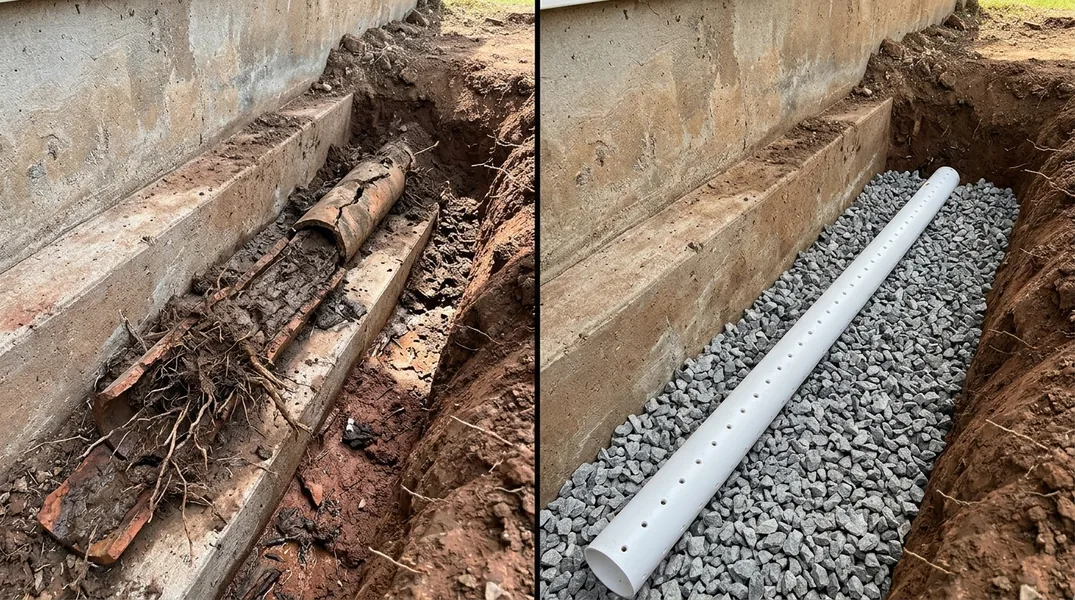
That is why waterproofing and drainage are usually discussed together with foundation repair. An Interior Drain Tile System can capture water that reaches the base of the wall and route it away, while Exterior Basement Waterproofing addresses the soil side by improving drainage and reducing the pressure against the wall. For homeowners dealing with damp basements or crawl spaces alongside foundation symptoms, Basement Waterproofing is often the practical first step before structural repairs are considered.
When to Call a Pro: Foundation Problems Signs Near Me
If you are searching for foundation problems signs near me and you have found cracking at the slab edge, a bowing block wall, or gaps that seem to be getting larger, it is time to get a professional opinion. A trained eye can tell the difference between normal settling and active movement, and that distinction matters because the repair strategy is different. Catching it early usually means a smaller, less disruptive repair. Waiting often means the movement has progressed into the framing, the floors, and the door openings.
Norman Waterproofing serves homeowners across the area and can evaluate the slab edge, the foundation walls, and the drainage around the home in one visit. You can call (405) 561-3307 to ask questions or schedule a free estimate. If you want to understand what different repair approaches typically involve before you call, the team can also walk you through pricing so there are no surprises. In Lexington and throughout the surrounding communities, the same advice applies: look at the slab edge first, document what you see, and get a professional assessment before small symptoms become expensive problems.
Looking for a professional basement waterproofing contractor in Norman? Norman Waterproofing responds fast for all your basement waterproofing needs.
Get a Free QuoteOur services: Basement Waterproofing · Interior Drain Tile System · Exterior Basement Waterproofing